




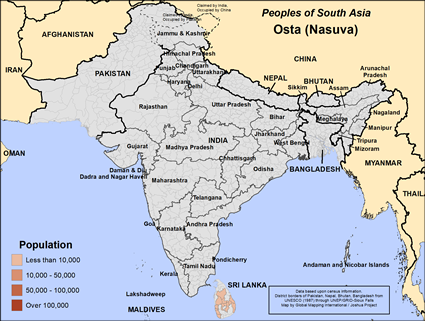
The Osta, also known as Nasuva in parts of Sri Lanka, are a small Muslim community traditionally associated with barbering and grooming occupations. They are found primarily among the Tamil-speaking populations of Sri Lanka, especially in the eastern and northern regions of the island. Historically, occupational communities such as the Osta developed distinct social identities tied to specialized trades that were passed down through generations within the family.
The Osta have lived within the broader cultural world of Sri Lankan Muslims and Tamil society for centuries. Their identity has been shaped by Islamic faith, local customs, family lineage, and village-based community relationships. Sri Lanka's long history of trade, colonial influence, ethnic conflict, and religious diversity has also affected communities such as the Osta over time.
Many Muslim communities in Sri Lanka experienced hardship and displacement during the country's decades-long civil conflict. Even after the war ended, economic and social challenges continued to affect many minority communities across the island.
Traditionally, Osta men worked as barbers and providers of grooming services within village communities. In South Asian society, barber communities often held important social roles connected not only to grooming but also to ceremonial events and community interaction. While some families may still continue these traditional occupations, many younger people now work in labor, trade, transportation, small business, or urban service jobs.
Family life is generally close-knit, with extended family networks remaining important for social support, marriage arrangements, and economic assistance. Respect for elders and preserving family reputation are strongly valued within the community.
Tamil language and culture shape many aspects of daily life, including food, celebrations, and social customs. Meals commonly include rice, curries, lentils, seafood, vegetables, and spiced dishes typical of Sri Lankan Tamil and Muslim cuisine. Religious festivals and family gatherings play an important role in maintaining community identity and relationships.
Economic conditions vary widely. Some families have achieved greater stability through education and urban employment, while others continue to face financial hardship, unstable work opportunities, and limited access to resources. In areas affected by past conflict, infrastructure and economic recovery may still be ongoing challenges.
The Osta primarily follow Sunni Islam, the dominant branch of Islam among Sri Lankan Muslims. Their religious life includes belief in Allah as the one true God and Muhammad as His prophet. Islamic practices commonly include daily prayers, fasting during Ramadan, mosque participation, almsgiving, and observance of Islamic festivals and ceremonies.
Like many South Asian Muslim communities, some religious practices may also reflect syncretistic influences from local customs and folk beliefs. Reliance on charms, blessings, spiritual healers, or protective rituals can exist alongside formal Islamic teaching. Religious identity is closely connected to family and community belonging.
Most Osta know Jesus only as a prophet mentioned in Islamic teaching and have never heard a clear biblical explanation of His death, resurrection, and role as Savior. Very few have had meaningful exposure to biblical Christianity or long-term relationships with committed believers.
The Osta need faithful access to the gospel through Scripture, discipleship, and compassionate Christian witness presented in culturally understandable ways. Because Islamic identity is strongly tied to family and community loyalty, individuals who become interested in following Christ may face social pressure, rejection, or isolation.
Practical needs may include improved educational opportunities, stable employment, healthcare access, vocational training, and support for struggling families. Communities affected by poverty or lingering effects of past conflict may especially benefit from compassionate ministry and long-term relational support.
There is also a need for spiritually mature Tamil-speaking believers who can establish biblically grounded churches and faithfully share the gospel among Muslim communities throughout Sri Lanka.
Pray that the Osta people will hear a clear and faithful presentation of the gospel in the Tamil language.
Pray that God will raise up compassionate Christian workers who are willing to serve faithfully among the Osta community in Sri Lanka.
Pray that the Osta people will be adopted through the People Group Adoption program so that ongoing prayer and future gospel engagement will continue among them.
Pray that Tamil-speaking believers in Sri Lanka will grow strong in biblical faith and boldly share the truth of Jesus Christ with surrounding Muslim communities.
Scripture Prayers for the Osta (Nasuva) in Sri Lanka.
https://peoplegroups.org/
https://en.wikipedia.org/wiki/Sri_Lankan_Moors
https://www.britannica.com/place/Sri-Lanka
https://en.wikipedia.org/wiki/Islam_in_Sri_Lanka
| Profile Source: Joshua Project |


